
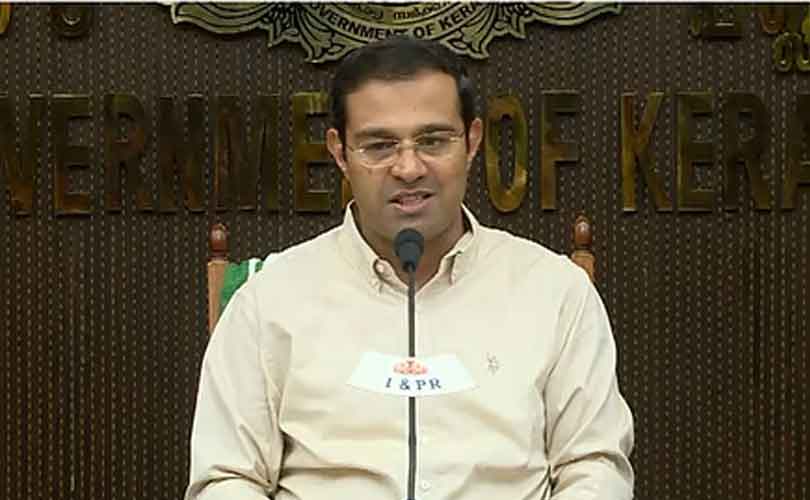
Trivandrum: The state government has granted greater academic and administrative autonomy to self-financing colleges in the higher education sector. New guidelines issued by the Higher Education Department ease the requirement for special government permission to start new courses and increase seats in existing courses. The reform aims to ensure enhanced self-governance of colleges and to simplify administrative procedures related to course management.
According to the new directives, self-financing colleges across the state no longer need specific government approval to introduce new courses, offer additional courses under the self-financing category, or expand seat capacity in existing courses. However, these institutions must continue to notify the government in advance about such decisions. This is expected to accelerate the process of initiating new courses and expanding learning facilities.
The government has also amended the existing norm requiring annual renewal of the No Objection Certificate (NOC) for conducting courses. Under the updated guidelines, renewing the NOC once every three years will suffice. This change is anticipated to reduce procedural delays and time lost when colleges seek approvals annually.
To obtain a three-year permission, a college must pay a challan fee of Rs 650 and an affidavit fee of Rs 810, totaling Rs 1,460 per course. The circular clarifies that colleges granted approval for the 2026-27 academic year can apply for renewal in 2029-30 after paying fees only for the 2027-28 and 2028-29 academic years.
Nonetheless, government colleges, aided colleges, and autonomous aided colleges must still seek prior government permission to introduce new courses or permanently increase seats in the aided category. No additional fees will be charged for processing such applications, as specified in the new guidelines. This restriction aims to maintain government oversight over courses and positions with financial implications in the aided category.
It is important to note that the relaxations granted to self-financing colleges are not uniformly applicable to all categories of courses. Government approval remains mandatory for new courses in regular self-financing colleges. However, these colleges do not need to seek government approval again to increase seats in already operating courses; decisions can be made by the concerned universities or statutory regulatory authorities. This change empowers universities and regulatory bodies with greater decision-making authority regarding seat increments.
Colleges remain responsible for complying with standards relating to academic quality, infrastructure, faculty availability, and requirements set by regulatory agencies. Although more authority is granted to autonomous colleges, government monitoring mechanisms will not be fully withdrawn. After each academic year’s admission process concludes, details of newly started courses and allotted additional seats must be submitted by the universities to the government. This system will facilitate statewide aggregation and monitoring of new courses launched, increased learning opportunities, and seat availability across higher education institutions.
Special government approval will still be required in matters not clearly covered by existing laws or regulations, as well as for reconsideration of decisions made by universities or regulatory bodies where government intervention is deemed necessary.
The new guidelines represent a move towards administrative decentralization in the state’s collegiate education system. They are expected to reduce delays in implementing academic decisions and enable the introduction of new courses aligned with evolving employment trends and student interests. The reform could particularly facilitate launching innovative disciplines, technology-based courses, and vocational skill development programs related to emerging job sectors.
Ensuring the quality of new courses, adequate learning infrastructure, and qualified teaching staff will remain the responsibility of the colleges and affiliated universities. The Additional Secretary of the Higher Education Department has issued the circular incorporating these guidelines. Copies have been sent to all state universities and the Director of Collegiate Education, with instructions to implement the new provisions.
Meanwhile, Opposition Leader Pinarayi Vijayan criticized the government’s move, stating it could open avenues for autonomous colleges to profit. He warned that relaxing government controls might enable some institutions to charge higher fees and commercialize education. Concerns were raised that waiving government permission for starting new courses and increasing seats may prioritize institutional financial interests over students’ welfare.
There is a growing demand to ensure effective regulation and inspection to safeguard student interests and maintain educational standards. Increasing autonomy must be accompanied by accountability and transparency from educational institutions. The sufficiency of infrastructure, faculty-student ratios, and the quality of academics must be thoroughly assessed when new courses and additional seats are approved.
While the new decision could expand learning opportunities and enhance institutional freedom in the state’s higher education sector, the benefits to students and impacts on educational quality will depend largely on subsequent implementation and enforcement.
n
Original Malayalam report: Malayalam Daily News