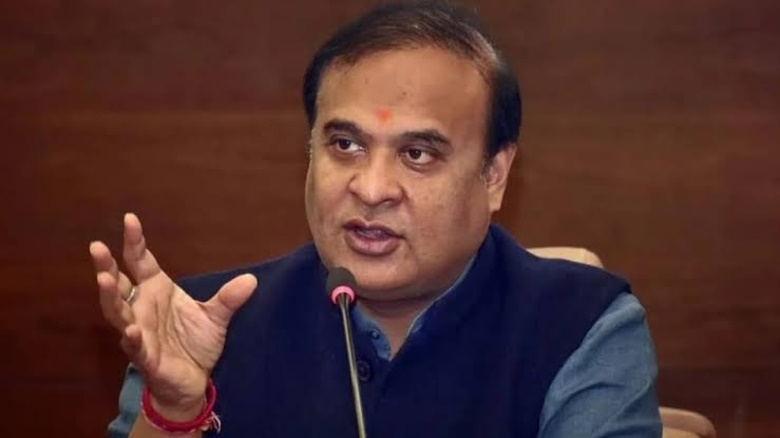
 Guwahati: Assam Chief Minister Himanta Biswa Sarma launched a scathing political attack on senior Congress leader and Leader of the Opposition in the Lok Sabha, Rahul Gandhi. In a sarcastic remark, Sarma claimed that Sonia Gandhi had been trying for years to make her son, Rahul Gandhi, the Prime Minister of India and had explored various means to achieve that goal.
According to Sarma, when all these efforts failed, Congress leaders organized a “mock Parliament” (symbolic Parliament) on the lawn of Congress president Mallikarjun Kharge’s residence and symbolically declared Rahul Gandhi the Prime Minister.
The Assam Chief Minister asserted that the political reality was entirely different. He remarked that Rahul Gandhi could become Prime Minister only in an imaginary or “mock Parliament,” while Narendra Modi would continue to lead the country as Prime Minister in the real Parliament.
His remarks were seen as a sharp political criticism of the Congress leadership and its ambitions to return to power at the Centre.
Meanwhile, Chief Minister Himanta Biswa Sarma expressed immense happiness and satisfaction over the reported in-principle approval of the proposed high-speed bullet train corridor connecting Delhi and Guwahati.
He stated that the long-awaited project had received preliminary approval, although several technical, administrative, and procedural formalities would need to be completed before construction could begin.
Sarma emphasized that one of the most encouraging developments for Northeast India was the inclusion of Guwahati in the country’s proposed high-speed railway network. He described the initiative as a significant step toward improving transportation infrastructure, regional connectivity, and economic development.
Highlighting the strategic importance of the proposed route, the Chief Minister noted that the railway corridor would pass through the Siliguri Corridor, commonly known as the “Chicken’s Neck.” This narrow stretch of land connects mainland India with the northeastern states and plays a crucial role in the region’s transportation, trade, and national security.
According to Sarma, strengthening railway connectivity through this strategically important corridor would enhance accessibility to the Northeast and create new opportunities for economic growth, tourism, trade, and investment.
Outlining his next steps, the Chief Minister said he would soon visit New Delhi to meet Union Railway Minister Ashwini Vaishnaw and discuss various aspects of the proposed high-speed railway project.
He indicated that the discussions would focus on the project’s technical requirements, proposed alignment, implementation procedures, and other essential details necessary to move the initiative forward.
Sarma described the Central Government’s decision as bold, visionary, and potentially transformative for Assam and the entire northeastern region.
He credited Prime Minister Narendra Modi’s leadership and Railway Minister Ashwini Vaishnaw’s efforts for advancing the proposal, describing it as an important development in the modernization of India’s railway infrastructure.
The Chief Minister expressed confidence that the proposed Delhi–Guwahati bullet train corridor, once implemented, would significantly reduce travel times, strengthen connectivity between Northeast India and the national capital, and accelerate regional economic development.
He further stated that the initiative could become a major milestone in Assam’s development journey and contribute to the broader goal of integrating the northeastern states more closely with the country’s expanding transportation network.
Sarma maintained that improved railway infrastructure would not only benefit passengers but also support tourism, business activities, investment, and long-term economic opportunities across the region.