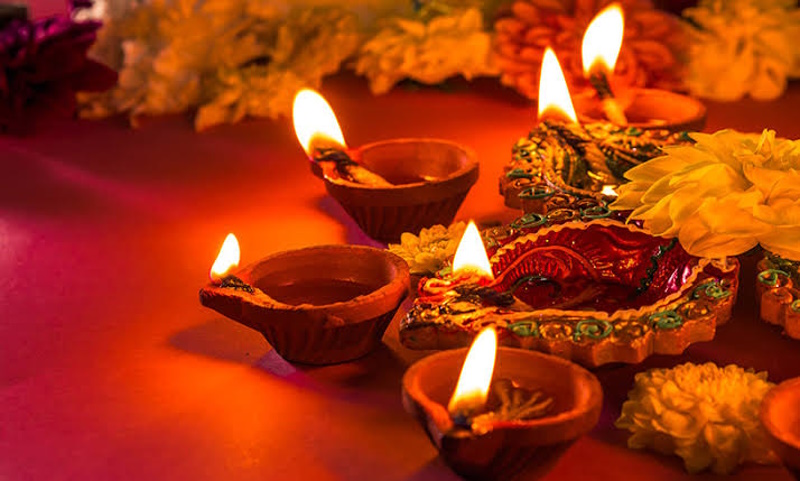
New Delhi: The excitement of Diwali celebrations is spreading across the country, conveying the triumphant message of light over darkness, goodness over evil, and knowledge over ignorance. As homes, temples, and public places glitter with the radiance of oil lamps and colorful lights, people in various regions warmly welcome the festival of lights through traditional rituals and festivities.nnDiwali is not only a religious festival but also a celebration of love, unity, and hope, where family members, relatives, and friends gather to share joy. With a distinctive place in Indian culture and heritage, Diwali ranks among the most significant festivals nationally. The very name 'Deepavali,' meaning a row of lamps, captures the essence of this festival. Just as light dispels darkness, Diwali conveys the profound message of eliminating despair, ignorance, and evil from human life and filling it with the illumination of goodness, knowledge, and hope.nnIn anticipation of Diwali, homes, commercial establishments, and places of worship typically begin decoration days in advance. Scenes glowing with light from oil lamps and electrical lights transform nights into vibrant days across many regions. Entrances of residences are beautifully decorated using flowers and colored powders to create captivating rangolis. People don new clothes, prepare sweets, exchange gifts, and come together to partake in the celebrations.nnNumerous mythological stories and beliefs explain the origins of Diwali, the most renowned being the legend related to Lord Rama's return to Ayodhya. According to the Ramayana, after defeating the demon king Ravana and completing fourteen years of exile, Rama returned to Ayodhya accompanied by Sita and Lakshmana. The joyful inhabitants of Ayodhya are believed to have lit myriad oil lamps in homes and streets to welcome their beloved prince. The festival of Diwali commemorates this day when Ayodhya was bathed in the glow of countless lamps. It represents the victory of truth and righteousness over unrighteousness and ego. To this day, various parts of North India celebrate Diwali with special emphasis on Lord Rama’s return to Ayodhya, particularly through extensive lamp-lighting ceremonies held at temples, riverbanks, and public spaces.nnIn South India, another prominent tradition associated with Diwali is the legend of Krishna’s slaying of Narakasura. Mythology recounts that Narakasura oppressed the people, and Krishna defeated him, liberating those under his tyranny. This victory is seen as emancipation from fear and subjugation. Narakachaturdashi, observed during Diwali, holds a special ritual significance in this context. In some southern regions, the festival customarily begins with early morning oil baths, wearing fresh attire, and performing special prayers.nnThe celebration of Diwali in Kerala, Tamil Nadu, Karnataka, Andhra Pradesh, and Telangana varies according to local traditions but generally includes distributing sweets and organizing family gatherings. Lakshmi Puja occupies a central place in Diwali observances, particularly in Northern and Western India. During this ritual, people worship Goddess Mahalakshmi, the deity of wealth, prosperity, and abundance, with the belief that such worship brings happiness, peace, and financial growth to their households. Homes and commercial establishments are cleaned and ornately decorated while lamps are lit. In many households, Ganapati, the remover of obstacles, is also worshipped alongside Lakshmi during this auspicious occasion.nnFor traders and industrialists, Diwali holds special significance. It is common for certain business communities to commence new account books and mark the beginning of financial transactions during this period. Many consider Diwali an auspicious time to launch new ventures and business operations.nnOne of the most picturesque aspects of Diwali is the array of decorations. Earthen lamps (manchiraths) are lined up on porches, windowsills, and verandahs. Buildings are adorned with colorful electric lights and decorative lamps. Rangolis made from flowers, colored powders, rice, and other natural materials grace the entrances of homes. These rangolis not only welcome guests but also symbolize prosperity. Families unite to prepare special dishes and sweets such as laddu, jalebi, burfi, gulab jamun, and kaju katli, which are widely shared during the festive period. Exchanging sweets and gifts with relatives, friends, and neighbors is a cherished tradition that strengthens bonds of affection and friendship.nnDiwali vividly manifests India’s cultural diversity. Each state and region preserves distinct legends, customs, and modes of celebration. In North India, the return of Lord Rama to Ayodhya and Lakshmi Puja are prominent. In Gujarat, Diwali coincides with New Year festivities for the business community. Maharashtra observes a series of ceremonies including Vasubaras, Dhanteras, Narakachaturdashi, Lakshmi Puja, and Bhai Dooj. In West Bengal, Kali Puja holds special significance during the Diwali season, involving worship and rituals dedicated to Goddess Kali.nnDespite regional differences, Diwali universally conveys the message of triumph of goodness and sharing of joy and hope. Furthermore, the festival transcends Hinduism, holding importance for other religious communities. For Jains, Diwali commemorates the Nirvana (liberation) of Mahavira, the 24th Tirthankara, with special prayers and spiritual ceremonies in temples. Sikhs observe Bandi Chhor Divas during this period, celebrating the release of the sixth Sikh Guru, Guru Hargobind Sahib, from imprisonment in Gwalior Fort along with 52 imprisoned kings. Gurdwaras, including the Golden Temple in Amritsar, hold special prayers and lighting ceremonies. Sikh communities mark this day upholding values of freedom, justice, and humanity.nnThe grandeur of Diwali celebrations is not confined to India; Indian diaspora and followers of various faiths worldwide also observe the festival. In countries such as the United States, United Kingdom, Canada, Australia, the UAE, Singapore, Malaysia, and Mauritius, cultural programs and community events mark Diwali. These celebrations offer opportunities for overseas Indian communities to introduce their culture and heritage to younger generations and foster cross-cultural respect and camaraderie. Indian classical dances, music performances, traditional food festivals, and decorative displays form part of events held internationally. Participation by people of diverse languages, cultures, and religions strengthens the message of mutual respect and cultural friendship.nnIn recent years, environmental concerns have become a focus during Diwali discussions. Excessive use of firecrackers raises issues such as air and noise pollution and health risks, especially for children, the elderly, and those with respiratory conditions. Various organizations and environmental activists advocate celebrating Diwali in an eco-friendly manner—using earthen lamps, natural materials for decorations, reducing plastic use, and minimizing or avoiding fireworks. Such measures help preserve the environment while maintaining the festival’s splendor.nnMore than a religious observance, Diwali symbolizes resilience and confidence in overcoming life’s adversities. The festival reminds us that no amount of darkness can extinguish even a single small lamp’s light. It encourages maintaining hope despite despair, sorrow, and crises while standing steadfast on the path of truth, justice, and goodness.nnBeyond celebrating wealth and prosperity, Diwali invites us to extend the joyous light to others—helping the economically disadvantaged, spending time with the lonely, sharing food and clothing with those in need. Just as a small lamp dispels darkness, even small acts of love and compassion can bring profound changes to eliminate hatred and division in society.nnTranscending boundaries of faith and custom, Diwali fosters unity and promotes the message of goodness and peace, standing as a brilliant emblem of India’s rich cultural heritage. The lamps lit in every home during Diwali also kindle light in human hearts—of love, hope, and harmony—making the festival’s celebration truly meaningful and complete.
n
Original Malayalam report: Malayalam Daily News