
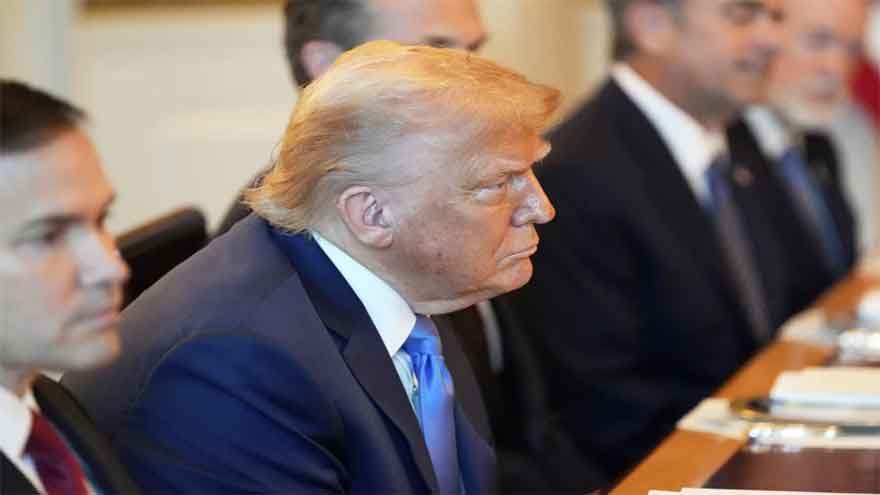
Many consider this midterm election a decisive political turning point in the history of American democracy. The election reflected strong popular sentiment against President Donald Trump’s policies and style of governance. With the Democrats gaining control of both chambers of Congress, a political environment has emerged to impose checks on the president’s powers. However, the world views this political shift in the United States with both hope and skepticism. This is because the challenges that arose during Trump’s administration—including those in U.S. foreign policy, trade relations, immigration policies, international agreements, and alliances—are not easily resolved.
During Trump’s second term, wide-ranging criticism targeted America’s domestic and foreign policies. These included the war with Iran, failures to establish peace in Ukraine and the Middle East, the trade war based on import tariffs, strict immigration controls, and rising living costs—all cited as sources of dissatisfaction with the administration. Trump’s approach, relying on America’s economic and military strength to interact with other countries, caused concern even among traditional allies. Countries long trusting America as a reliable partner started approaching Washington’s decisions with suspicion.
It was against this backdrop that Trump’s Republican Party faced a setback in the midterm elections. Observers interpret the election as sending a message that even in America’s 250-year history, the people remain capable of restraining executive power. Yet, two issues stand out: the survival of democratic institutions and America’s international credibility.
Joe Reeve, a 29-year-old startup entrepreneur based in London, reflects the world’s general concern. ‘‘An election may bring change in American politics,’’ he says, ‘‘but the question remains how other countries can trust a political system that may drastically shift policies every few years. The world has realized that America’s political framework allows unpredictable policy fluctuations. Today America may proclaim friendship and cooperation with a country, and tomorrow it may take harsh measures against the same country.’’
Another salient fact is that this midterm defeat does not end Trump’s presidential powers. According to the U.S. Constitution, the president holds extensive authority in foreign policy, military leadership, and administration. Gaining a Congressional majority does not guarantee the opposition can block all presidential decisions. German Chancellor Friedrich Merz has raised the same concern. Trump has often bypassed Congress for major decisions these last two years, and whether this approach will change post-election is unclear.
Political analyst and Eurasia Group founder Ian Bremmer addresses the crisis facing U.S. allies. ‘‘The key question is not whether America will return, but to which policies it will return and how long any change will endure.’’
Trump’s economic policies, especially increased import tariffs under the ‘‘America First’’ slogan, faced heavy international criticism. High tariffs on products from various countries adversely affected global trade relations. Businesspeople and farmers in countries like China and Australia felt the impact. Hong Kong industrialist Danny Low, whose aluminum coating factory derives over 30 percent of its orders from American customers, saw his business severely affected by the tariffs. He hopes reduced Trump influence will bring more favorable trade policies.
Hamish McIntyre, leader of Australia’s farmers’ union, remains cautious. He suggests a Congressional power shift alone may not fundamentally alter U.S. trade policy. Chinese industrialists share this concern. Whether Democrats or Republicans hold power, Washington’s competitive stance toward China is unlikely to change significantly.
This indicates that concerns about American trade policy extend beyond Trump personally. European traditional allies and Japan approach this political change with vigilance. Ivan Slatkin, head of an industrial organization in Switzerland, welcomed the strength of American democratic institutions but doubted the ‘‘America First’’ political concept would disappear soon. Yoshinobu Tsutsui, chairman of the Japan Business Federation, highlighted the necessity of strengthening economic and security ties with the U.S. as vital to Japan’s interests. Thus, no major country can entirely disregard America.
At the same time, fully trusting America as in the past is difficult. This contradiction is a defining feature of today’s international politics. Trump’s immigration policies impacted the lives and futures of hundreds of thousands worldwide. Visa restrictions and uncertainty surrounding green card procedures have caused significant anxiety for foreign nationals relying on the U.S. for higher education, jobs, and permanent residence.
Ambika, an Indian IT professional in the U.S., exemplifies this. Having chosen America as her permanent residence, recent immigration policy changes have worried her. She is uncertain if the political changes in the midterms will lead to more favorable outcomes for foreign workers. This is a crucial issue, especially regarding skilled professionals migrating to the U.S. from countries including India.
Foreign talent contributes vitally to America’s technology, healthcare, research, and higher education sectors. However, persistent immigration uncertainty may prompt skilled foreign workers to consider other countries.
One often-overlooked fact in discussions about midterm outcomes is that Trumpism is not merely Donald Trump’s political views. It is a political trend rooted in nationalism, anti-immigrant sentiments, economic dissatisfaction, opposition to globalization, and distrust of traditional political institutions within American society. Despite losing a Congressional majority, a substantial segment of the American public continues to support Trump’s ideas. There remains a possibility of similarly minded leaders returning to power in future elections.
To restore America’s international credibility, policy stability and trustworthiness in practice are more crucial than changes in election outcomes. Clear progress must be made in improving alliances, respecting international agreements, mitigating trade war fallout, ensuring clarity and consistency in immigration policies, and protecting democratic institutions and the rule of law. Particularly, there is a growing call for America to demonstrate greater responsibility in economic and military decisions affecting other nations.
Indonesian industrialist Aditya Surya’s views embody this discourse: America will regain lost trust only when it consistently respects democratic institutions, upholds the rule of law, and honors its international partners. Some observers compare this midterm election’s political shift to the changes seen after the 1974 election following the Watergate scandal.
However, history teaches that electoral victories alone do not solve all democratic problems. Key considerations are whether democratic institutions can constrain those in power, constitutional checks function effectively, political leaders respect public mandates, and international responsibilities are met.
British political observer Martin McSweeney notes that although Americans have had several opportunities for change, they have frequently failed to translate these into long-term political reforms. The world recognizes the necessity of cooperating with the U.S., but many countries remain uncertain about how secure and stable that cooperation will be.
Certain political decisions may suffice to lose trust, but regaining it requires years of stable, responsible action. American voters have issued a political message; now, the world watches keenly to see if America’s political leadership can transform that message into genuine policy change.
n
Original Malayalam report: Malayalam Daily News